The Wait: On Kneeling, Stillness, and the Devotion of Surrender
She is already on the floor when the light finds her.
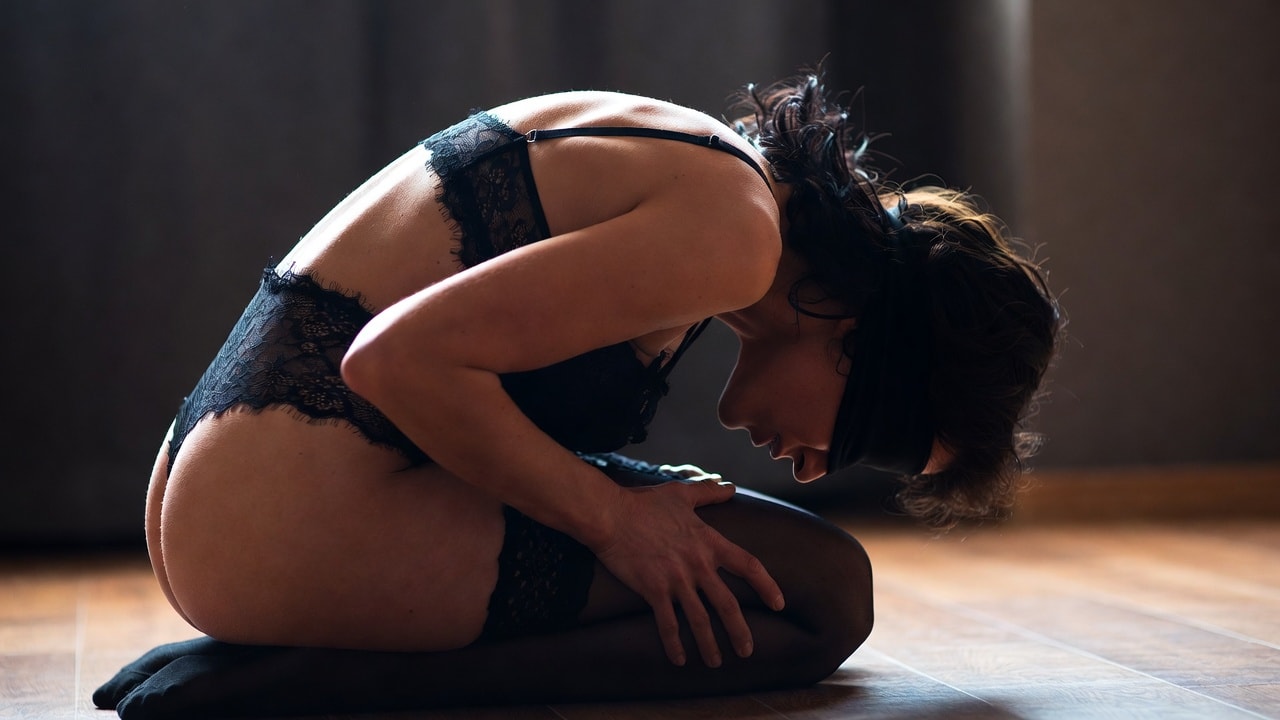
Knees folded beneath her. Spine curved forward like a question she has stopped asking. Forehead lowered toward the wood, lace dark against her skin, a blindfold tied snug over her eyes. She is not waiting for instruction. She is the instruction — a whole language spoken without a single word.
This is the posture most people misunderstand. They see stillness and assume nothing is happening. They could not be more wrong. The wait is where everything happens.
Stillness Is Not Emptiness
We are taught to fear stillness. To fill every silence, answer every pause, move toward the next thing before the current thing has finished. The modern mind treats waiting as a problem to be solved.
Surrender asks the opposite.
When a submissive kneels and lowers her head, she is not switching off. She is tuning in. The body goes quiet so that something finer can grow loud: the breath, the heartbeat, the small electric awareness of being watched, held, considered. Stillness is not the absence of intensity. It is intensity with nowhere to escape.
Watch the kneeling figure long enough and you understand. Her quiet is not weakness. It is concentration. She is doing the hardest thing a restless person can do — staying, on purpose, in a moment she did not get to control.
The Geometry of Devotion
There is a reason the kneeling pose has survived across centuries and cultures, in prayer and in power exchange alike. The body knows things the mind argues with.
To kneel is to lower yourself willingly. To fold forward, forehead toward the ground, is to offer the most vulnerable line of the body — the back of the neck, the curve of the spine — to someone you have decided to trust. Every angle says the same thing. I am giving you this. You did not take it. I am placing it in your hands.
That distinction matters more than anything else in this lifestyle. Surrender is not something done to a person. It is something a person does, deliberately, with their eyes open — or in this case, with their eyes covered, which is its own kind of open.
Why the body speaks louder than words
A submissive can tell you she trusts you. Lovely. Words are cheap and easily borrowed.
But a body that kneels, settles its weight, and goes soft at the shoulders is not performing. The nervous system does not lie. When tension leaves the jaw and the hands rest open instead of clenched, that is real surrender, written in muscle. This is why the posture is so much more honest than any conversation. You cannot fake the moment your body decides it is safe.
The Blindfold and the Trust It Demands
Notice the blindfold. It changes the entire equation.
Sight is control. We use our eyes to track threats, to prepare, to brace ourselves for what comes next. Take sight away and you take away the ability to anticipate. The blindfolded submissive cannot see the hand before it lands, cannot read the room, cannot manage the moment. She can only feel it. She can only wait.
This is why a blindfold is never just fabric. It is a contract. It says: I will let myself not know, because I trust you to hold the knowing for both of us.
When you remove a person's ability to predict and they let their shoulders fall anyway, you have been handed something rare. Do not be careless with it. The darkness she has accepted is only bearable because of who she believes is standing in it with her.
What the Dominant Does With the Wait
The wait is not idle time for the one in control. It is the work.
A thoughtless dominant rushes. They treat the kneeling submissive as a pause before the real event, a loading screen before the scene. They miss the entire point. The wait is the scene. The longer, quieter, more attentive version of it.
What does it ask of the one in charge?
Presence. She can feel whether you are truly there or merely nearby. Watch her. Let her sense the weight of your attention even through the blindfold. Attention is the first gift you give, and the one she will remember.
Patience. Do not fill the silence to soothe your own discomfort. Let it stretch. Anticipation is built in the space between intention and touch, and you are the one building it. Every second you let pass on purpose is a second she spends entirely focused on you.
Restraint. The most powerful thing you can do with a waiting submissive is, often, nothing at all. A breath near her ear. A hand resting on the back of the neck without moving. Stillness answered with stillness. This is where the air in the room changes.
The Power Hidden in the Lower Position
Here is the paradox that newcomers struggle with, and that the experienced come to cherish.
The kneeling one looks powerless. She is not.
She has chosen this. She can end it with a word — the word you agreed on before any of this began, the one that turns all the silence back into ordinary light. Within that single safeguard lives total freedom. She is not trapped on that floor. She is choosing it, breath by breath, and could rise at any moment she wished to.
That is what makes her surrender beautiful rather than sad. It is not resignation. It is a gift offered by someone fully capable of withholding it. The submissive on her knees often holds more quiet authority than the person standing over her realizes — because everything that happens, happens only because she keeps saying yes.
Surrender as strength, not collapse
Let us bury an old lie. To submit is not to be weak. It takes a particular kind of strength to hand control to another person and stay soft inside that handing-over. Most people cannot do it. They flinch, they manage, they grab the reins back the moment they feel exposed.
The one who can kneel, breathe, and remain — eyes covered, will offered — is not the weak one in the room. She is the brave one.
Building Your Own Ritual of the Wait
If this speaks to something in you, begin gently. Surrender is a practice, not a performance, and it rewards the patient.
Start with the position itself, without expectation of anything that follows. Let the submissive find a kneel that her body can hold without strain — comfort is not the enemy of intensity, it is what allows it to last. Add a cushion. The wood floor is for the photograph; your knees are for real life.
Agree on the safeword first, always, in plain daylight words. Then agree on the shape of the wait. How long. What it means. How it ends. Structure does not kill the magic. Structure is the riverbank that lets the current run deep instead of spilling out and disappearing.
Then practice the stillness together. Let her kneel. Let yourself watch. Resist the urge to perform dominance loudly. The quiet command of simply being present, fully, is more potent than any theatrical display. You will both feel the room tighten. That tightening is the whole point.
The Last Word, Before the Silence
The image stays with you because it is honest. A woman on the floor, folded into trust, eyes covered, perfectly still — and somehow the most alive thing in the frame.
This is what we mean when we talk about surrender at its best. Not domination as noise. Not submission as defeat. Two people agreeing, deliberately, to slow down until the only thing left in the room is attention and breath and the unbearable sweetness of waiting.
Kneel when you are ready. Not before. And when you do, understand that you are not giving yourself away. You are placing yourself, carefully, into hands that have earned it.
The wait is not the price of surrender. The wait is the gift.
— Mistress Krigar