The Studded Collar and the Offered Throat: On Baring Your Most Vulnerable Place
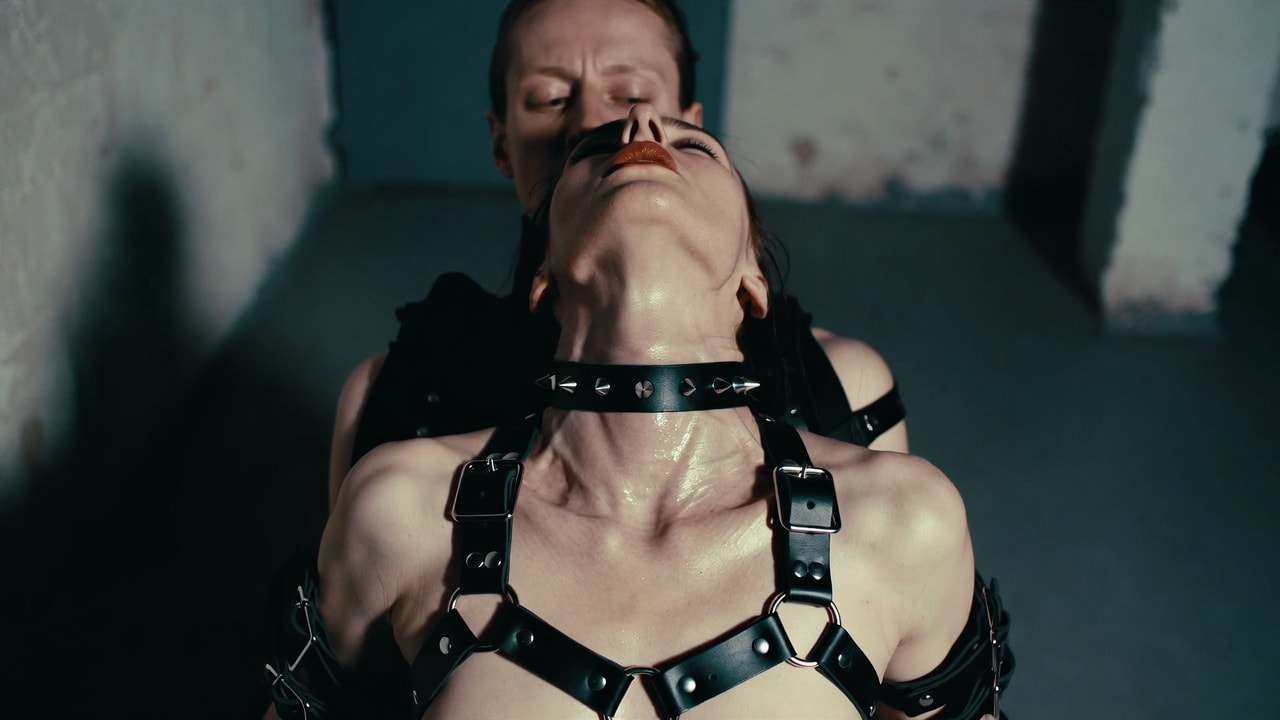
There is a moment, before anything is said, when the head tips back and the throat comes open to the room. No words. No instruction yet. Just the soft underside of someone laid bare in cold light, a studded collar sitting close against the pulse. If you have ever wondered what surrender actually looks like, it looks like this. Not a struggle. An offering.
I want to talk about that gesture. The bared throat. The collar that rests over it. What it means to give your most defended place to another person on purpose, and why so many of us find something close to peace in doing exactly that.
The Throat Is Not a Small Thing to Give
Every animal protects its throat. It is instinct older than language. We turn away, we tuck the chin, we guard the place where the breath and the blood run closest to the surface. To tilt the head back and hold it there is to override that instinct deliberately. It is to say, with the body and not the mouth, I have decided you are safe.
That decision is the whole thing. People imagine submission as something that is taken. It is not. The most powerful submission is given, and the throat is where the giving shows. A hand near the neck means nothing without the trust that lets the neck stay soft beneath it. The collar can be beautiful. The leather can be flawless. None of it works if the body underneath is braced.
So when I see a throat offered like this — chin up, jaw loose, the long line of the neck exposed without flinching — I do not see weakness. I see someone who has done the harder thing. They have chosen to be undefended. There is more strength in that than in any clenched fist.
What the Collar Actually Says
The collar is the oldest symbol we have, and the most misread. From the outside it looks like ownership, like a thing done to someone. Up close it is closer to a vow. It marks a place where two people agreed on something, and it keeps that agreement visible against the skin.
Look at the studs on a collar like this one. They face outward. They are a small declaration to the world: keep your distance. And yet the inside of that same band sits gentle against the throat of the one wearing it. That is the quiet joke of the collar, and the truth of it. Hard to everyone else. Soft to the one who holds the other end of the agreement. A boundary and an opening worn in the same circle of leather.
This is why collaring is never something I rush. A collar is not a costume piece you put on because the lighting is good. It is a sentence the body speaks for as long as it is worn. When I fasten one, I want the person wearing it to feel the buckle close and understand exactly what it means. You are held. You are mine to attend to. And you are free, for this stretch of time, of the weight of deciding everything for yourself.
The Weight That Lifts
That last part is the secret almost nobody talks about. People come to submission expecting to give something up and brace for the loss. What they find instead is relief. The collar does not take your power. It takes your burden. For these hours you do not have to be the one in charge, the one who plans, the one who carries the day on their shoulders. Someone else has that. You can set it down.
I have watched the change happen in real time. The shoulders drop. The breath gets slower and deeper. The face goes smooth. It is the look of a mind that has finally been allowed to stop holding everything at once. That is what the bared throat is reaching for. Not danger. Rest.
Trust Is Built Before the Collar, Not After
Let me be plain, because this matters more than any of the poetry. None of this works without trust, and trust is not conjured by a buckle. It is built slowly, in conversation, in small tests passed and remembered, in boundaries named out loud and honoured every single time.
The throat opens because the groundwork was laid long before the scene began. Because someone said this is where I stop and was believed. Because a safe word was given and treated as sacred. Because the first time something felt wrong, it ended at once, without sulking, without punishment, without making the person who spoke up feel small for speaking.
That is the unglamorous engine underneath all the leather. Power exchange is not the absence of rules. It is rules so well kept that the person inside them can finally relax. The collar is only as good as the agreements behind it. Anyone can buckle a strap. Earning the throat is the work.
The Dominant's Side of the Bargain
It is easy to romanticise the one who kneels and forget the one who stands. But the offered throat places a real weight on the person who receives it. To be trusted like that is not a trophy. It is a responsibility you carry carefully and never set down carelessly.
When someone bares their throat to me, I am not being handed power to spend. I am being handed care to keep. My job in that moment is to be worthy of the instinct they just overrode. To read the small signals — the catch of breath, the flicker behind the eyes, the difference between tension that delights and tension that warns. Good dominance is mostly attention. Soft on the outside, watchful underneath. The same as the collar.
Surrender as a Skill, Not a Surrender of Self
There is a fear I hear often, usually from people new to this, sometimes whispered, sometimes dressed up as a joke. If I give in, do I lose myself?
No. The opposite, in my experience. The people who surrender well are not the ones with no boundaries. They are the ones who know their boundaries so precisely that they can let go inside them without fear of falling. You cannot truly yield until you know exactly what you are yielding and what you are keeping. Surrender is not the erasure of the self. It is the self, choosing.
That is why I call it a skill. It can be learned. It gets deeper with practice. The first time, the throat opens an inch and the eyes stay wary. Months later, with the right person, it opens all the way, and the wariness is simply gone, because it is no longer needed. That progression is one of the most beautiful things I get to witness. It is intimacy built like a house, one honest brick at a time.
The Cold Room and the Warm Centre
Notice the setting in an image like this. Bare concrete. Blue, unforgiving light. Nothing soft in the room at all — except the person at the centre of it, throat open, utterly undefended. That contrast is the whole point. The starkness around them makes the trust at the middle of the frame burn brighter. You do not need velvet and candlelight to make surrender real. You need two people and an agreement kept.
In fact the plainness is honest. Power exchange does not happen in a fantasy. It happens between real people, in real rooms, with real nerves and real history. The cold room says: this is not a dream. This is a thing two people are actually doing, on purpose, with their eyes open. The warmth is not in the décor. It is in the throat that stays soft anyway.
If You Feel the Pull
Maybe you have read this far and felt something tighten and loosen at once. That is not a flaw in you. The longing to be held, to be guided, to lay down the endless weight of control for a while and be cared for inside clear lines — that is one of the most human appetites there is. There is no shame in it. There has never been any shame in it.
If the bared throat speaks to you, start where it is actually built: with words. Talk to someone you trust. Name what you want and what you fear. Set the boundaries first, plainly, before any leather comes near you. Find the person who treats your no as carefully as your yes, because that person — and only that person — has earned the right to your throat.
The collar comes last. It is the visible mark of an invisible thing already in place. Get the invisible thing right, and the rest is just the deilig, deliberate pleasure of wearing it.
Tip your head back when you are ready. Not before. And only ever for someone who understands what they have been given.
— Mistress Krigar