There is a particular quiet that lives in a room prepared for surrender. Not silence — quiet. The difference matters. Silence is empty. Quiet is full, and waiting.
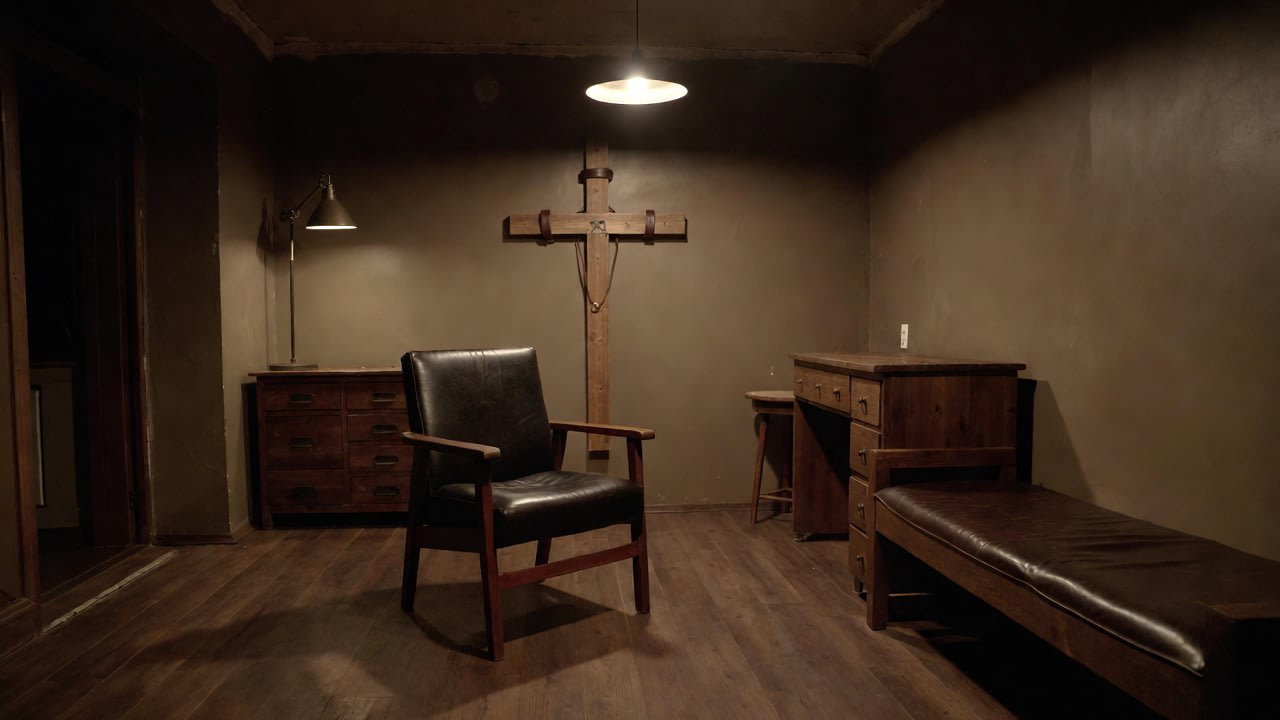
Step into a space like this one and you feel it before you understand it. A single low light overhead, warm as candle-fire. Wooden floors worn soft by use. A leather chair that has held the weight of many decisions. And against the wall, unhurried and certain, a wooden cross bound with leather straps — not a threat, not a performance, simply a promise kept in oak and hide. This is not a stage. It is a room. And rooms like this are where people learn what it means to let go.
Why a Space Matters
You can surrender anywhere. In theory. In practice, the body is not so easily persuaded. It carries the day in on its shoulders — the emails, the small negotiations, the hundred tiny controls we all perform to move through the world. You cannot simply command that weight to fall away. You have to give it somewhere to go.
That is what a dedicated space does. It is a threshold. When you cross it, you are telling your nervous system that the rules have changed. Out there, you decide everything. In here, you have agreed to decide less — and to trust that someone worthy is deciding for you.
The room in front of us understands this. Nothing in it shouts. The dresser is honest wood. The desk holds its corner without apology. The bench waits, patient and low. Even the cross, which a stranger might read as severe, is softened by the warmth of the light and the grain of the timber. This is deliberate. A space for surrender should not frighten you. It should settle you. Fear is loud. Trust is quiet.
The Atmosphere Is the Instruction
Notice what the light does. One source, hung low, pooling gold across the floor and leaving the corners in shadow. It draws the eye inward, toward the center of the room, toward the chair. It says: look here, not out there. Attention is the first thing a submissive offers, and a well-made room asks for it before a single word is spoken.
The materials speak too. Leather that has warmed under other bodies. Wood that has darkened where hands have rested. These are surfaces with memory. They tell you that others have crossed this threshold and been held here — that surrender is not a fall into the unknown but a step into something practiced, something safe.
This is the Nordic instinct in me, perhaps: strip away the theatrical, keep only what is true. A room does not need chains dripping from every wall to be a room of power. It needs intention. It needs one good light and one good chair and the unmistakable sense that everything here was chosen. Excess is insecurity dressed up as danger. Restraint — real restraint — is confidence.
Preparing the Room Is Part of the Ritual
Before anyone is bound, the space is bound first.
There is a ritual in preparation that many overlook, and it is one of my favorites. Setting the light. Laying out what will be used and putting away what will not. Wiping down the leather. Checking the straps, testing the buckle, feeling the give of it. This is not chore-work. This is devotion made physical. When a Dominant prepares a room, she is already beginning to hold the person who will enter it, long before they arrive.
And for the one who submits, walking into a room that was made ready for you — that is its own quiet undoing. To see that someone thought of your comfort, your safety, your surrender, and built a place to receive it. You understand, standing in the doorway, that you were expected. That you were wanted. The body reads that instantly. The shoulders drop. The breath slows. Half the work of surrender is done before a hand is laid.
What the Cross Really Means
Let me speak plainly about the object your eye keeps returning to.
A restraint cross is not about being trapped. This is the thing newcomers misunderstand most, and it is worth correcting. To be held against something solid, wrists secured, weight supported, is not a loss of freedom. For many, it is the first true freedom they have felt in years.
Think about what it removes. When you are held, you cannot fidget, cannot fix, cannot fill the silence with useful motion. You cannot manage. You are, for once, entirely relieved of the exhausting duty of being in charge of yourself. The straps do not take something from you. They give you permission to stop carrying it.
That is why the leather is soft and the wood is warm. The cross is not an instrument of fear. It is a container. It says: I will hold the edges so that you can come apart safely inside them. And coming apart safely — with someone watching, someone responsible, someone who will put you back together when it is done — is one of the most profound experiences a person can have.
Trust Is the Architecture
None of this works without trust, and trust is not decoration. It is the load-bearing wall.
Everything I have described — the light, the leather, the straps, the ritual — is in service of a single agreement: you are safe here to not be safe. You may feel intensity you have never allowed yourself. You may reach edges you did not know you had. And the entire time, the structure holds, because it was built to. The Dominant holds it. The room holds it. The prior conversation — the boundaries drawn, the words agreed, the limits named and honored — holds it beneath everything else.
I want to be very clear, because it is the heart of all of this: surrender without trust is not surrender. It is just risk. What makes this beautiful, what makes it deilig — indulgent, worth sinking into — is precisely that it is safe. The power exchange is real. The control is real. And it rests entirely on a foundation both people built together, on purpose, with their eyes open.
A Space Is a Kind of Care
People imagine that dominance is about taking. Standing in a room like this one, you understand that it is mostly about giving.
Giving attention. Giving structure. Giving someone a place to lay down the weight they have been carrying alone, and the certainty that it will be picked back up gently. The severe-looking cross, the low gold light, the honest wood — every element is a form of care wearing a serious face. That is the paradox at the center of power exchange, and once you feel it, you never quite unfeel it: the most controlling gestures and the most caring ones are, very often, the same gesture.
Before You Cross the Threshold
If you are drawn to a room like this — and something in you is, or you would not still be reading — begin gently and begin honestly.
Talk first. Always first. Name what you want and what you fear, out loud, before anyone touches anything. Agree on the words that stop everything instantly, and mean them. Start with less intensity than you think you can handle; there is nothing to prove and everything to feel. And pay attention to how a space and a person make you feel before you surrender to them. Your body already knows the difference between a room that will hold you and one that only wants to take. Trust that knowing.
The quiet in a prepared room is not waiting for you to be brave. It is waiting for you to be honest. Bravery is loud and fragile. Honesty is what actually lets you let go.
Cross the threshold when you are ready. Not before. And when you do — when the light pools warm on the floor and the door closes soft behind you and someone you trust says you can stop holding all of that now — you will understand what this room has been quietly promising all along.
You were never meant to carry it alone.