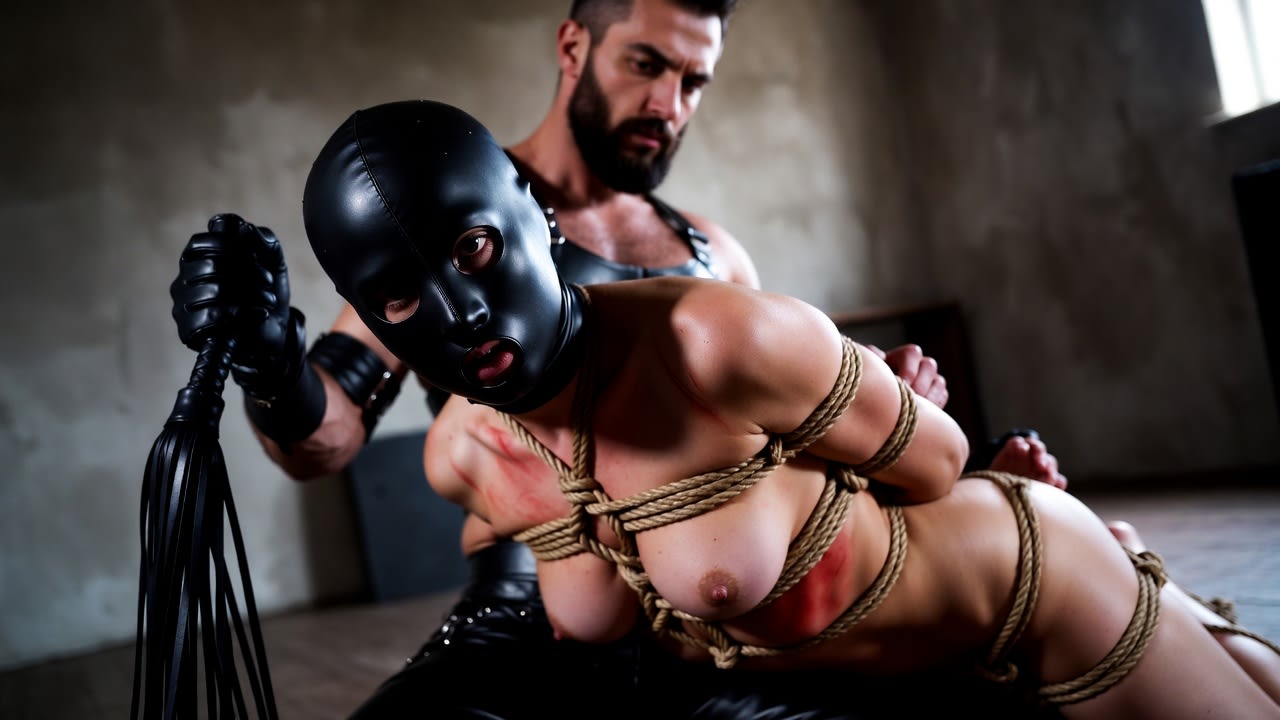
He does not raise it quickly. That is the first thing the flogger teaches you — that almost all of its power lives in the moment before it falls. The leather hangs from his hand, still, a heavy bloom of falls gathered and waiting. You are already breathing differently. Nothing has touched you yet. That is the point.
People think impact play is about the strike. It isn't. It is about everything that surrounds the strike — the pause, the breath, the listening, the trust that lets your shoulders finally drop. The flogger is only the instrument. You are the one being played.
The Pause Before the First Fall
Anticipation is its own kind of touch. When a dominant lets the flogger rest against your skin without moving it, you feel the whole weight of what is coming and what is being withheld. Your nervous system leans toward it. Your imagination does more work than any tail of leather ever could.
I take that pause on purpose. I let it stretch a little longer than is comfortable. Not to be cruel — to be clear. The pause says: I decide when. You wait. And in the waiting, something in you that has been clenched all week begins, quietly, to let go.
The first fall, when it finally comes, is rarely hard. It lands soft, a warm thud spreading across the shoulders or the upper back, where the body is broad and well-padded and made to receive it. It is a greeting, not a punishment. It says: I am here. We are beginning. Stay with me.
What the Flogger Actually Is — and What It Is Not
A flogger is a handle and many soft tails, usually leather or suede. It is one of the most forgiving impact tools there is, which is exactly why it is so often the first one a person reaches for. Its many falls spread force across a wide area instead of concentrating it into a single line. The sensation is broad, rounded, enveloping — closer to deep massage than to anything sharp.
It is not about damage. It is not about how much you can take. A scene built on endurance alone is a scene that has misunderstood the whole exchange. The flogger is a way of speaking to the body directly, underneath language, in a rhythm the thinking mind cannot argue with.
Thud and Sting
Two words you will learn quickly. Thud is the heavy, resonant sensation — the one that settles into the muscle and feels grounding, almost warm. Sting is the brighter, sharper edge that wakes the surface of the skin. A skilled hand moves between them, building heat with thud, lifting your attention with sting, reading which one you need by the way your breath changes.
You do not have to know these words to enjoy them. But it helps to understand that what looks, from the outside, like a single repetitive motion is in truth a conversation with many registers. The body answers in flushes of warmth, in the loosening of the jaw, in the small involuntary sounds you stop being able to hold back.
The Rhythm That Undoes You
Rhythm is where the flogger becomes something more than sensation. A steady, climbing cadence — soft, then warmer, then deeper, with the timing held just predictable enough to lean into — does to the mind what a drumbeat does. It narrows the world. The to-do list goes quiet. The endless internal commentary that runs your day finally has nothing to say.
This is the threshold people mean when they talk about subspace: that floating, honeyed, slightly unmoored state where thought thins out and the only real things are the rhythm, the warmth, and the voice telling you that you are doing beautifully. It is not magic and it is not for everyone, but the flogger, with its patient repetition, is one of the surest roads to it.
The dominant's job, in that stretch, is not to chase intensity. It is to hold the rhythm — to be the steady, reliable thing you can pour your surrender into. Power, here, looks like restraint. The control is in the patience.
Anticipation Is Half the Surrender
Notice how much of this has nothing to do with pain. A hood over the eyes, rope holding the arms so the body cannot brace, a long silence before the next fall — these are not about hurting. They are about anticipation, and anticipation is the truest form of surrender the flogger asks of you.
When you cannot see the arc of the swing, you cannot prepare. When you cannot move, you cannot flinch your way back into control. All you can do is breathe, and wait, and trust the hand that holds the leather. That trust is the whole architecture of the scene. Everything else — the warmth, the rhythm, the drift — is built on top of it.
This is why I say the flogger plays you and not the other way around. Your part is not to perform. Your part is to receive: to let the bracing go, to let the breath drop low, to let yourself be moved.
Trust Is the Real Instrument
None of this works without trust, and trust is not a mood — it is a practice. Before any flogger is lifted, the real work has already been done: the conversation about what you want and what you do not, the boundaries named plainly, the safeword agreed and honoured without exception. A dominant worth surrendering to wants those limits. They are not an obstacle to the scene. They are what makes the surrender possible.
A safeword is not a failure. It is the floor that lets you fall freely, knowing exactly where the bottom is. The submissive who can say stop and be instantly, completely heard is the submissive who can let go of everything else. Power exchange is consensual or it is nothing. The deeper the surrender, the more carefully that ground has to be laid.
Watch a thoughtful top during a scene and you will see it: the constant, quiet reading. The check of the breath. The glance at the hands and the colour of the skin. The half-second pause to ask, without breaking the spell, whether you are still with them. That attention is the dominance. The flogger is just where it becomes visible.
After the Last Fall
A scene does not end when the flogger goes still. It ends in the quiet afterward — the part the lifestyle calls aftercare, and the part that matters more than almost anything that came before. Warmth. Water. A blanket. A steady arm and a low voice. Time to let the body come back down from wherever the rhythm carried it.
The drop that can follow intense sensation is real, sometimes a day or two later, and it is not a sign anything went wrong. It is the simple cost of having opened that far. Good aftercare is how the trust survives the comedown — how the person who surrendered is gathered back up and reminded, plainly, that the surrender was a gift and was received as one.
If You Are New to This
Begin slow. Begin soft. A flogger across the broad muscle of the upper back and shoulders, away from the spine, the kidneys, the bones — that is where you learn. Start with the lightest contact and let the heat build, falling by falling, with the breath leading the way. There is no prize for going hard early. There is only the much greater pleasure of going deep.
Talk before you play. Name the one thing you most want to feel and the one thing you most want to avoid. Agree on the word that stops everything. Then let the rest be discovered slowly, which is the whole delight of it — the not-rushing, the long patient unspooling of sensation, the way an hour can disappear into warmth and rhythm and the quiet of a mind that has finally been given permission to stop.
This is not about being hurt. It is about being held — by rhythm, by attention, by a hand that knows exactly when to wait. The flogger only ever asks one thing of you. Not endurance. Not performance.
Stillness. Breath. The slow, deliberate choice to let go and let the next fall land.
That is the surrender. And done with care, there are few things more deilig than the moment you finally give it.
— Mistress Krigar