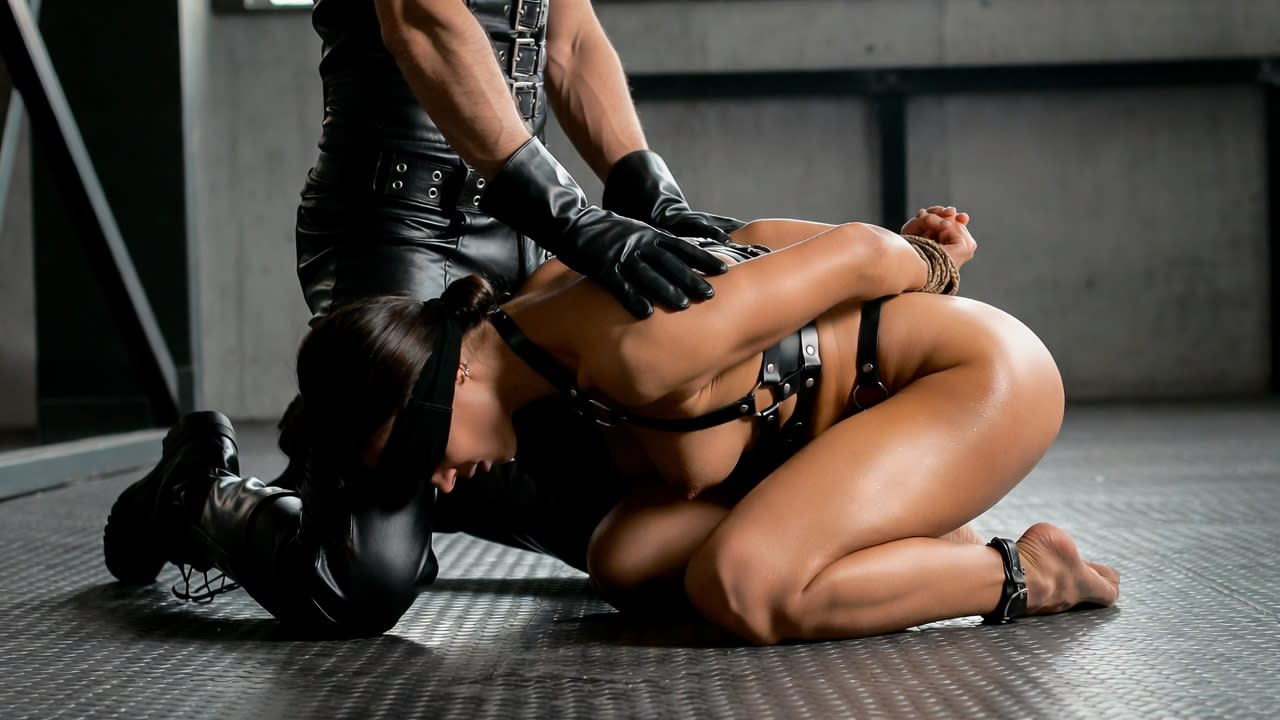
There is a moment, just before the cloth settles over your eyes, when the whole world narrows to a single breath. You can still see the room — the grey of the concrete, the low light pooling on the floor, the shape of the one standing over you. And then the dark arrives. Not the dark that frightens children. The dark you chose. The dark you asked for.
This is where surrender begins. Not with rope. Not with leather. With the simple, enormous act of giving away your sight.
What the Blindfold Really Takes
People think the blindfold is about hiding. It is the opposite. The blindfold does not hide you — it reveals you. With your eyes open you can manage your face, arrange your expression, pretend you are composed. Behind the cloth there is nowhere to hide. Every flinch, every caught breath, every small sound you did not mean to make is laid bare.
That is the trade. You give up the one sense you rely on most, and in return you are seen completely. There is something deilig in that exposure — indulgent, almost luxurious — once you stop fighting it.
Sight is control. We use our eyes to predict, to brace, to stay one step ahead. Take the eyes away and you take away the bracing. What is left is a body that can no longer prepare for what comes next. A body that must simply receive.
The Body Listens When the Eyes Go Quiet
The first thing you notice in the dark is how loud everything else becomes.
You hear the creak of leather before a hand lands. You feel the warmth of someone near you before they touch you — that strange heat the skin reads from inches away. A breath against the back of your neck becomes an event. The drag of a gloved fingertip down your spine arrives like weather, slow and total, because you never saw it coming.
This is the quiet genius of sensory deprivation. Remove one channel and the others flood. Anticipation stretches. A second becomes long. The space between a promise and its keeping fills with everything you imagine might be coming, and that imagining is half the pleasure.
The blindfold does not make you feel less. It makes you feel more, by making you wait for it in the dark.
Trust Is Not a Feeling. It Is a Decision.
Here is the truth underneath all of it. You cannot be blindfolded by someone you do not trust. Or rather — you can, but it will not be surrender. It will be fear wearing surrender's clothes.
Real trust is not the warm certainty that nothing bad will happen. It is the decision to let go of your own vigilance and place it in another's hands. To say, without seeing, I will let you guide me, catch me, hold the edges so I do not have to.
That decision is the whole architecture of power exchange. The blindfold simply makes it visible. When you cannot see, you have no choice but to rely on the one who can. Every step they lead you, every position they place you in, is an act of faith made with your body instead of your words.
The Kneel
Watch what the dark does to the body, and you will see it fold downward. The blindfolded almost always sink toward the floor. Knees find the ground. The spine softens. The head bows, not in defeat, but in offering.
It is instinct. Without sight, the floor becomes the one honest thing — solid, certain, asking nothing of you but to be met. To kneel low, wrists drawn behind you, the cool of concrete under your shins and the warmth of a presence above you, is to make yourself small in the most deliberate way. Not diminished. Concentrated. Every nerve gathered into one quiet point of waiting.
This is surrender at its most distilled. Bound, blind, and kneeling, you are not less than you were. You are exactly what you came here to be.
Why the Dark Is Warmer Than You Think
Newcomers brace for the blindfold to feel like exposure to cold. It rarely does. More often it feels like being wrapped. The cloth closes off the harsh edges of the room, and what remains is intimacy — a private chamber the two of you carry between you, no matter how industrial the space around you.
In that closed dark, shame tends to dissolve. You cannot see yourself, cannot study your own body for flaws or read judgment on a face. There is only sensation and the steady fact of being held. Many find they can let go of things in the dark they could never release in the light. The blindfold gives permission. It says: no one is grading you. There is nothing to perform. Only this.
That is the warmth. Not the absence of intensity, but the absence of self-consciousness. The freedom of being, for once, entirely in the hands of someone who has decided to take care of you while taking you apart.
For the One Who Holds the Dark
If you are the one tying the cloth, understand the weight of what you have been given. A blindfolded submissive has handed you their whole nervous system. Every sense they own is now pointed at you.
So slow down. The greatest mistake a dominant makes with a blindfold is rushing, as if the cloth were a prop. It is not a prop. It is an instrument, and it is tuned by patience. Let the silence sit. Touch where they do not expect, then return to where they do, so they never quite settle. Speak — your voice becomes their compass in the dark, and a low, certain word lands deeper than any touch. Let them hear that you are still there, still watching, still in control of the edges so they can lose themselves inside them.
Power held carelessly is just force. Power held with attention is devotion. The blindfold asks you for the second kind.
Beginning Your Own Surrender
If the dark calls to you, begin small and begin honestly.
Talk first, in the light, fully clothed and on equal footing. Name what you want and what you do not. Agree on a safeword — a single clear word that stops everything, instantly, no questions, no negotiation — and agree that it will always be honoured. Surrender only works when there is a floor beneath it. The blindfold is not an escape from consent. It is consent made into ritual.
Then go gently. A soft cloth. A few minutes. A hand that never quite leaves your skin so you are never truly alone in the dark. Notice how your breath changes. Notice the moment the bracing stops. That moment — when the body finally believes it is safe enough to let go — is the whole point. Everything else is built on it.
And afterward, come back into the light slowly. Let the eyes adjust. Let yourself be held while the world returns. Surrender does not end when the cloth comes off; it ends when you have been gathered up and brought home.
The Last Word
To be blindfolded is to say, with your whole body, I trust you to be my eyes. It is the smallest piece of fabric and the largest act of faith. There is no rope stronger than that — no collar, no chain — than the willingness to go into the dark on someone else's word and find, waiting there, not fear but rest.
Close your eyes. Breathe out. The room you were so busy watching was never the point.
The point was always the letting go.
— Mistress Krigar