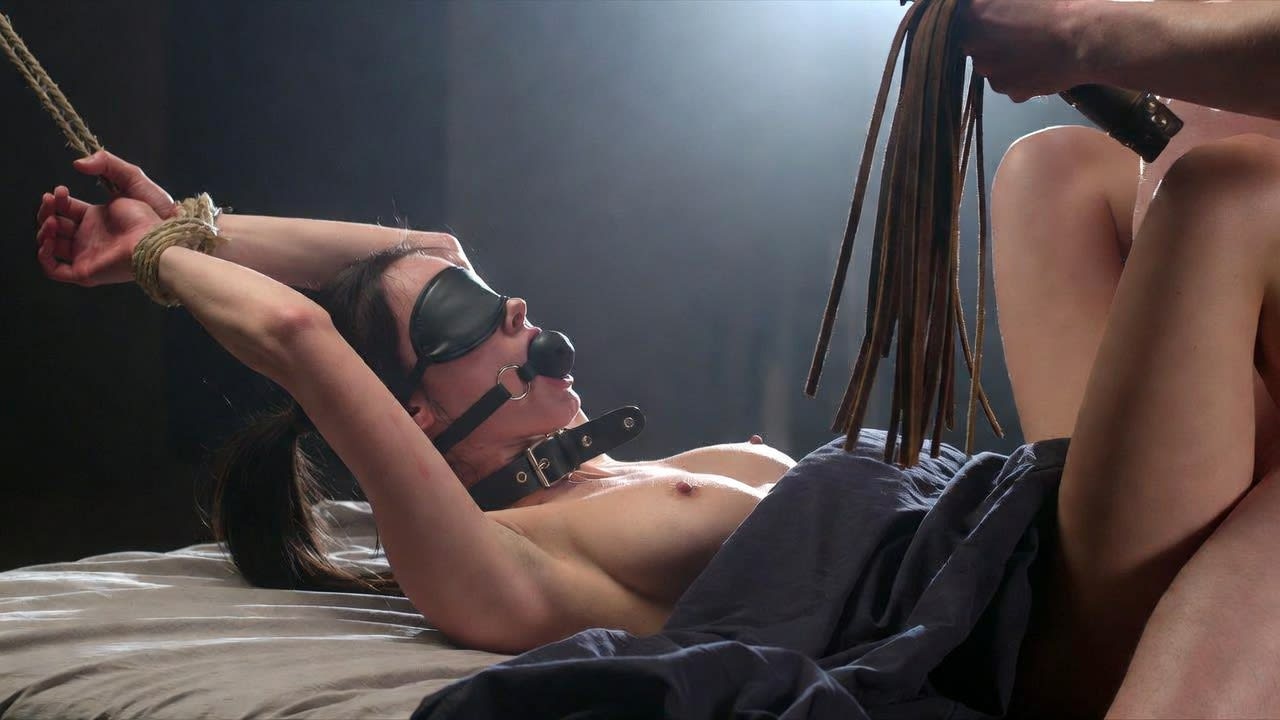
Most people imagine a scene begins with a single act. One blindfold. One length of rope. A single, decisive moment of yielding.
But the deepest surrender is rarely a single act. It is a sequence. It is taken from you sense by sense, removal by removal, each one drawing you further down until what remains is only feeling and faith.
This is a piece about layering. About what happens when sight, voice, and movement are not taken all at once but one after another — the eyes first, then the mouth, then the hands — until a person is held so completely that there is nothing left to do but trust. It is, when done with care, one of the most deilig and demanding journeys two people can take together.
One Removal Is a Door. Three Is a Threshold.
A single deprivation is a door left ajar. Cover the eyes and the room goes dark, but the voice still works, the hands still move, the body can still negotiate its own space. There is plenty of submission in that — but there is also still a foothold, still a way to manage the moment from the inside.
Layering closes the footholds, one at a time.
This is the quiet architecture beneath the image of a body bound, blindfolded, and silenced beneath a single shaft of light. It is not chaos. It is order — a deliberate, patient narrowing. Each restraint added is a sentence in a longer story, and the story is always the same: less of you in charge, more of you given over.
The dominant who understands layering does not rush to the end. They build.
The Eyes First
Sight goes first, always, because sight is the most controlling sense. It rushes ahead, measuring, bracing, deciding what is safe before the moment has even arrived.
Take it away, and the bracing stops. The blindfold settles, the world goes soft and dark, and the body — denied its usual feast of information — begins to lean on everything else. The skin wakes up. A breath against the neck arrives like weather. The wait before a touch becomes its own kind of touch.
But the eyes are only the first removal. With sight gone, the person is listening now — to footsteps, to breath, to the rustle of movement nearby. They are still reaching outward, still gathering. The scene is not finished. It has only begun to narrow.
Then the Voice
The second removal is the one people underestimate.
To take someone's sight is to change what they receive. To take their voice is to change what they can give. A gag does not simply silence — it removes the reflex to explain, to perform, to fill the space with words. So much of what we say in intimate moments is management dressed up as speech: a nervous laugh, a running commentary, a steady narration to keep ourselves in control of how we are seen.
The gag ends all of it.
What is left when the words are gone is startlingly honest. A breath. A small sound that cannot be shaped into a sentence. The whole body becomes the only language available, and it cannot lie. There is a vulnerability in being unable to speak that goes far beyond the physical — it is the surrender of the last tool you had for steering the moment.
And here is the part that matters: with voice removed, the agreement between the two people must already be perfect. The boundaries spoken in the light, the signal that ends everything instantly, the deep trust that the one in control is watching closely — all of it must be in place before the mouth is ever sealed. The gag is only safe because everything was said first.
Then the Hands
The third removal is the body itself.
Rope at the wrists, drawn gently overhead, and the last foothold is gone. Now there is no reaching, no bracing, no quiet repositioning. The person cannot manage their own space because they no longer command it. They are held — by the rope, yes, but far more by the agreement the rope represents.
This is the moment the layering has been building toward. Sight gone. Voice gone. Movement gone. What remains is a person reduced to pure sensation and pure trust, suspended in the dark, waiting.
And the waiting is everything.
The Poised Hand and the Long Wait
There is a reason the most charged image of a scene is not the strike but the moment before it — the flogger lifted, unmoving, while the bound and blindfolded body waits in the dark, not knowing when, or from where, or how.
That suspended second is the whole point.
When you cannot see and cannot speak and cannot move, anticipation becomes enormous. The mind, starved of information, fills the silence with electricity. Every nerve stands at attention. A whisper of movement in the air becomes unbearable in the most exquisite way. The pause is not empty — the pause is the scene. A skilled hand knows this and refuses to hurry it, because the cruelty and the kindness of making a willing person wait are the same gesture, and that gesture is where the real intimacy lives.
The flogger may never even fall the way they expect. That uncertainty is the gift. In the dark, you do not get to know what comes next. You only get to trust.
Why Layering Demands More, Not Less, Care
Let me be plain, because this matters more than anything else here.
The more you take from someone, the more responsibility you hold. A person stacked with deprivations — unable to see, to speak, to move — has handed you nearly everything, and they have done it on the strength of a promise. That is not a license. It is a weight.
Layered play asks the one in control to become more attentive, not less. To read a body that cannot use words. To check in through touch — a hand laid flat on the chest, a squeeze answered by a squeeze, a non-verbal signal agreed upon long before the gag went in. To watch breath and tension the way a sailor watches weather. The boldest dominant is never the most skilled. The most attentive one is.
And to the submissive considering this: layer slowly. You do not arrive at total surrender on the first night, and you should not want to. Take one removal at a time across many encounters. Learn how your body answers the dark before you add silence. Learn silence before you add the rope. Build the trust in the same order you will one day build the scene — patiently, deliberately, with nothing rushed.
What Comes Back
Here is what surprises people about surrender taken this deep.
The person does not return diminished. They return larger. Wrung out in the best way, unburdened, set down gently back into themselves more fully than when they left. There is a particular peace on the face of someone who has been allowed, for an hour, to stop holding everything — to be guided rather than guiding, to exist as nothing but feeling and faith and the steadiness of a worthy hand.
That is what the layering offers beneath all its charge: not just heightened sensation, though there is plenty, and not just the thrill of restraint, though that too. It offers the rarest permission of all — to let go completely, in stages, in safety, in the dark.
Closing — A Word From Mistress Krigar
Surrender is not a single moment. It is a descent, taken one careful step at a time, and it is only ever as deep as the trust that carries it.
So build slowly. Speak everything in the light before you take it away in the dark. Choose hands that have earned each removal before they ask for the next one. And when the eyes are covered and the voice is sealed and the body is held, do not be afraid of how quiet it becomes.
That quiet is the whole point. That quiet is where you finally let go.