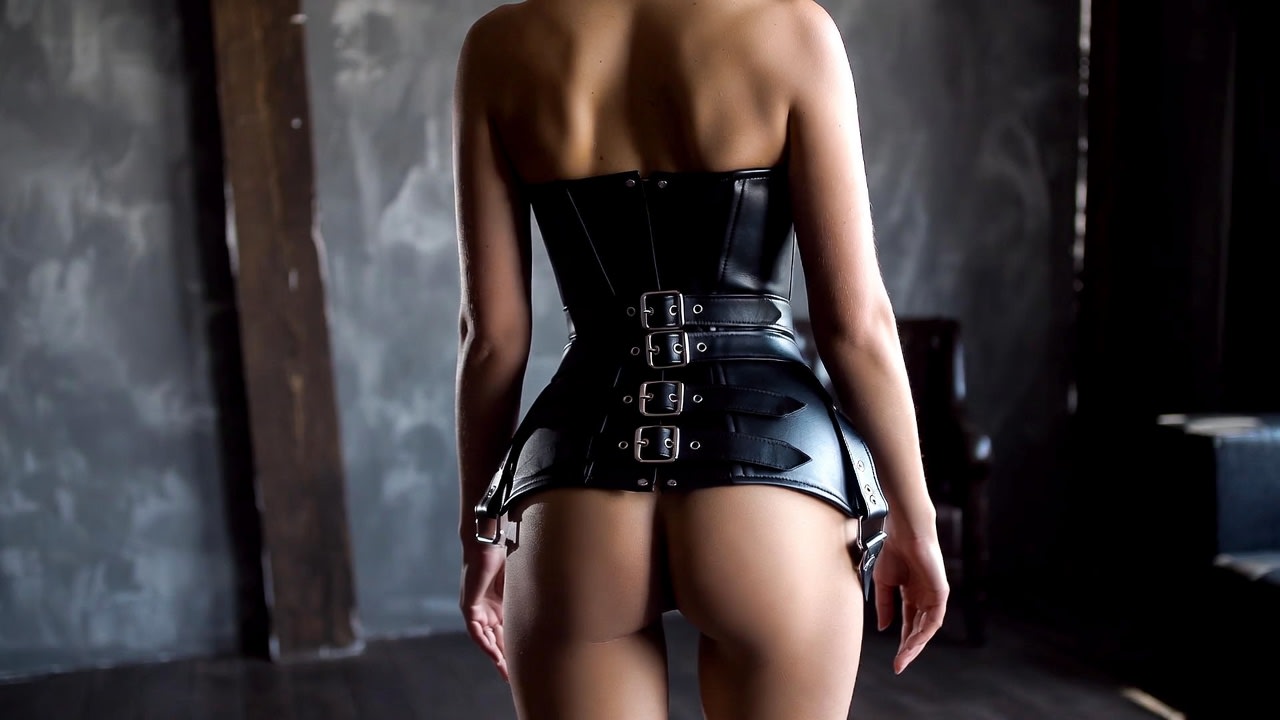
There is a moment, before anything else happens, when the leather is still open at the back. The garment hangs loose against the skin, waiting. Nothing has been decided yet. And then the first pull comes — slow, deliberate — and the body remembers what it is here for.
This is where surrender begins. Not in the dramatic gesture. In the quiet tightening of a single lace.
The architecture of being held
Look at a corset from behind and you are looking at structure. A spine of buckles. A column of tension running from the small of the back to the shoulder blades. Each clasp is a decision. Each one closed is a small agreement: yes, hold me here. Yes, a little tighter.
People think restraint is about losing freedom. It isn't. Restraint is about being given a shape. The leather does not erase you — it draws a clear edge around you, tells you exactly where your body ends and the discipline begins. Inside that edge there is a strange, deilig spaciousness. When the structure holds you, you no longer have to hold yourself.
That is the secret the corset has always kept. It looks like control imposed from the outside. It feels, from the inside, like permission.
Posture is a language
Watch how a body changes when the laces draw tight. The shoulders settle back. The chin lifts a fraction. The breath shortens and deepens at once, pulled into the upper chest, made conscious. You cannot slouch in a well-fitted corset. You cannot hide. The garment insists that you carry yourself — that you stand inside your own desire instead of apologising for it.
This is why posture is the first lesson of power exchange. Long before a single command is spoken, the body is already saying something. A submissive learns to wait beautifully. To kneel without collapse. To present rather than perform. The corset teaches this without a word, simply by making certain shapes impossible and others inevitable.
And for the one doing the lacing? There is power in feeling another person yield by degrees under your hands. Not taken. Given. There is a world of difference, and the difference is everything.
The ritual of the lace
I am drawn, always, to the slowness of it.
Anyone can rush. Rushing is easy and forgettable. The lacing of a corset refuses to be hurried. You start at the top, or the bottom, and you work in pairs, drawing each cross of the cord a little snugger than the last, pausing to let the body adjust. The wearer breathes out. You take the slack. They breathe out again. You take a little more.
There is conversation in this even when no one is speaking. Too much? asks the hand. Not yet, answers the body. Now, it says, a moment later. Now you may.
This is consent made physical — not a contract signed once and forgotten, but a living thing, checked and re-checked in the small movements between two people. Surrender is never a single act. It is a series of yeses, each one freely given, each one able to be withdrawn. The corset, drawn tight by patient hands, is one of the purest expressions of that truth I know.
What the leather knows
Leather has memory. It warms to the body. It keeps the shape of the one who wears it. There is a reason it sits at the centre of so much of this lifestyle — it is honest material. It creaks. It holds. It marks faintly and lets go.
To be dressed in it is to be claimed by something that will not flatter you the way soft fabrics do. Silk forgives. Leather decides. When the buckles close one after another down the spine, the message is unmistakable: you have chosen to be contained, and the containing has begun.
And containment, for the right person, is not a cage. It is relief. So much of ordinary life asks us to manage ourselves endlessly — to be measured, available, in control. The corset offers the opposite arrangement. For a while, the holding is someone else's job. For a while, you are allowed to simply be held.
Trust is the real garment
None of this works without trust. That is the part the photographs never quite show.
A corset laced by careless hands is just discomfort. A corset laced by hands you trust becomes something else entirely — an embrace with a structure, a held breath you are allowed to share. The buckles mean nothing on their own. What gives them weight is the knowledge that the person behind you is paying attention. That they will feel the moment it becomes too much. That they want your surrender, not your endurance.
This is the quiet centre of power exchange that newcomers so often miss. They see the leather and imagine severity. The truth is softer and far more demanding. To dominate well is to be relentlessly attentive. To submit well is to be relentlessly honest. The corset sits exactly where those two disciplines meet, and it asks both people to be better than they are in their hurried daily lives.
Surrender as a kind of strength
Let me say plainly what the world still gets wrong.
Surrender is not weakness. It is one of the most demanding things a person can offer. To let go on purpose — to hand the holding of yourself to another and stay present while you do it — takes more nerve than control ever has. The one laced into the corset is not the powerless one in the room. They are the one brave enough to be seen wanting.
There is enormous strength in standing still while someone draws the cord tight. In keeping your shoulders back. In breathing through the moment the structure takes hold and choosing, again, to stay. Power exchange is misnamed, really. Nothing is lost in the exchange. Two people simply agree, for a while, on who carries what — and in that agreement both of them become more themselves, not less.
The closing buckle
The last buckle is my favourite. By then the body has stopped resisting. The breath has found its new, shallower rhythm. The shape is set. There is a stillness that arrives in that final clasp — a settling, a yes that does not need to be spoken because the whole body is already saying it.
That stillness is what all of this is for. Not the leather, beautiful as it is. Not the buckles or the laces or the architecture down the spine. Those are only the means. What we are really after is that moment of quiet surrender, when control has been handed over with open eyes and the only thing left to do is feel.
Take your time getting there. Surrender, done well, is never rushed.
— Mistress Krigar