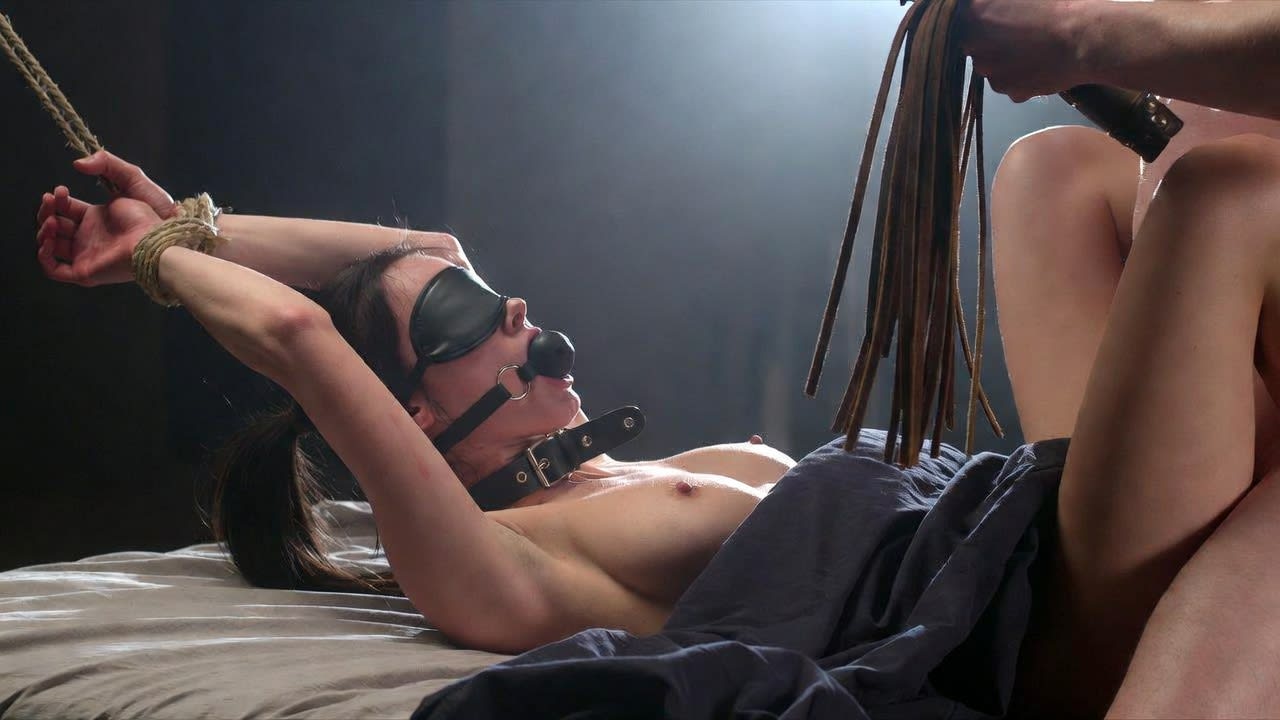
Arms Overhead: The Surrender of Being Stretched Open and Made to Wait
There is a particular quiet that only arrives once your hands stop being your own. Not clasped behind your back, where they can still brace, still hide, still pretend at composure. Overhead. Drawn up and away, roped to a point above you, until your whole body becomes one long, open line and there is nothing left to cover. Nothing left to guard.
This is the posture of complete offering. And in its own patient, unhurried way, it is one of the deepest surrenders I know.
Why Overhead Is Different
When the hands are bound behind the back, the body still curls inward. The shoulders round. The spine keeps a little of its armour. It is submission, yes, but it is submission that still holds something back for itself.
Overhead undoes that. The rope pulls the wrists up and the ribs lift with them. The throat lengthens. The whole front of the body — the soft, unguarded stretch of it — is presented rather than hidden. You cannot fold. You cannot flinch away and stay where you are. You are, quite literally, opened.
What surprises most people is that this openness does not feel like exposure in the frightened sense. Done with care, it feels like relief. The decision has been taken out of your hands, because your hands are no longer in the conversation. All that is asked of you now is to be here, stretched and still, and to let the waiting do its slow work.
The line of the body becomes the message
A body bound open overhead says something a kneeling body cannot. It says: I am not bracing for this. I have chosen to stop protecting myself, and I trust the hands above me to be worth that. There is no louder way to say yes.
The Blindfold Takes the Last Exit
Bind the arms and you take away her defence. Add the blindfold and you take away her escape.
Sight is how we stay one step ahead — reading the room, tracking the next movement, rehearsing our reaction before it is needed. Cover the eyes and all of that quiet vigilance has nowhere to go. The mind reaches out into the dark, finds no edges, and finally, blessedly, gives up the search.
What rushes in to fill the space is sensation. The cool of the air on skin that is stretched too taut to ignore it. The shift of weight on the bed. The sound of breathing that is not her own. Without sight, the smallest touch arrives enormous. A single fingertip drawn along the inside of a raised arm becomes a whole event. This is the economy of deprivation: take one sense away and every other one is paid double.
The Quieted Mouth
And then the mouth is stilled. Not to silence her — her sounds are welcome, they are honest — but to take away the last small lever of control that talking gives.
We use words to manage. To negotiate, to deflect, to narrate ourselves back into the driver's seat. Quiet the mouth and that management stops. What is left is breath, and breath does not lie. It quickens with anticipation and slows with surrender, and anyone paying attention can read the whole of you in it. There is a strange peace in being understood without being able to explain yourself. You are relieved of the work of performance. You only have to feel.
On Being Made to Wait
Here is the part no one tells you about. The rope, the blindfold, the stillness — none of it is the point. The point is the pause.
The flogger is raised. It hangs in the air above the stretched, waiting body, and it does not fall. Not yet. This is deliberate. Anticipation is not the appetiser before the scene; it is the scene. The mind, denied sight and denied speech and denied any way to hurry things along, has nothing to do but lean into the coming moment. Every second the strike is withheld, the body tunes itself finer, until the whole nervous system is standing at attention, waiting to be told what it is about to feel.
To be made to wait like this is to be told, without a single word: you will have it when I decide, not when you want it. That sentence, delivered in silence, does more than any command spoken aloud. It relocates the whole of the will. She stops wanting to control the moment and starts wanting only to be worthy of it.
Patience is the discipline being taught
The one who holds the flogger is not being cruel by holding it back. She is teaching. Patience under anticipation is a muscle, and the only way to build it is to be held at the edge and asked to stay soft there. The reward is not the strike. The reward is what the waiting does to you before it lands.
Trust Is the Whole Architecture
None of this stands up without trust, and trust is not a mood. It is a structure, built in advance, in daylight, with plain language.
Before the wrists ever go up, the two of you have already spoken. You know the word that stops everything. You know the tap or the hum that means slow down when the mouth cannot form it. You know that the one holding the rope is watching the colour of your hands, the tension in your shoulders, the rhythm of your breath — reading you as carefully as any lover ever has. Overhead bondage is intense on the body; a responsible top keeps the raised arms in play for a measured time, not an endless one, and brings them down before the shoulders complain.
This is what separates power exchange from mere roughness. The submissive is not being overpowered. She is being held — inside a structure she helped build, by someone who has earned the right to be the last voice in the room. The bonds are only as beautiful as the trust underneath them. Take the trust away and it is just rope. Leave it in place and the rope becomes a language.
The Freedom Hidden Inside the Restraint
People who have never surrendered assume that being bound is about losing freedom. It is the opposite. The freedom is the whole reason.
Stretched open, blind, quiet, and made to wait, she is finally free of the thing that exhausts her everywhere else: the relentless, grinding obligation to be in charge of herself. For once, she does not have to decide, or manage, or perform, or protect. Someone she trusts has taken all of it. What remains is astonishingly simple. Breathe. Feel. Stay.
That simplicity is the deilig heart of it — the thing worth sinking into. Not the theatre of it, not the props, but the deep and unhurried relief of being fully held and asked for nothing but presence.
If You Are Curious
Begin smaller than this. Bind the wrists in front before you ever raise them overhead. Learn the blindfold on its own before you layer the rest on top. Speak everything out loud beforehand — the yes, the no, the word that ends it. Surrender is not something you fall into by accident. It is something you build, deliberately, with someone who is worth the reach of your raised arms.
And when you are ready — when the trust is real and the structure is sound — let your hands stop being your own for a while. Let yourself be stretched open and made to wait. You may find, as so many do, that the deepest surrender is not in what is done to you.
It is in how completely you were willing to be held while it was.